
TikTok Shop AI Product Videos: The 2026 Seller Guide
TikTok Shop sellers are turning product photos into shoppable videos in minutes using AI — here's the real market data, the step-by-step workflow, TikTok's own posting rules, and the consumer trust risk most guides skip.

Umer Khan has spent the last two years building and testing AI-assisted content workflows for YouTube, from scripting to 2D animation. He writes about what actually works in AI video production including the parts that don't.
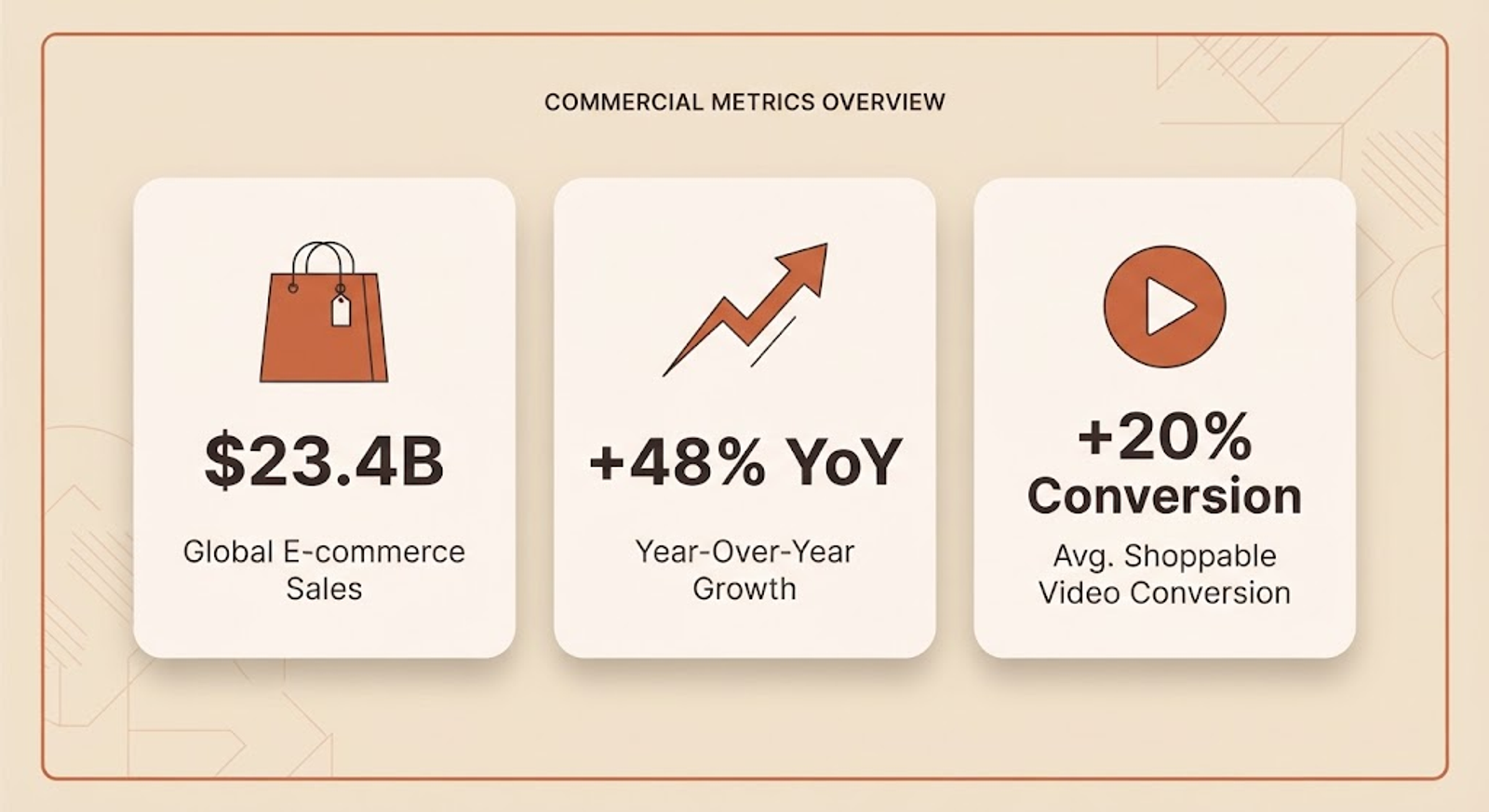
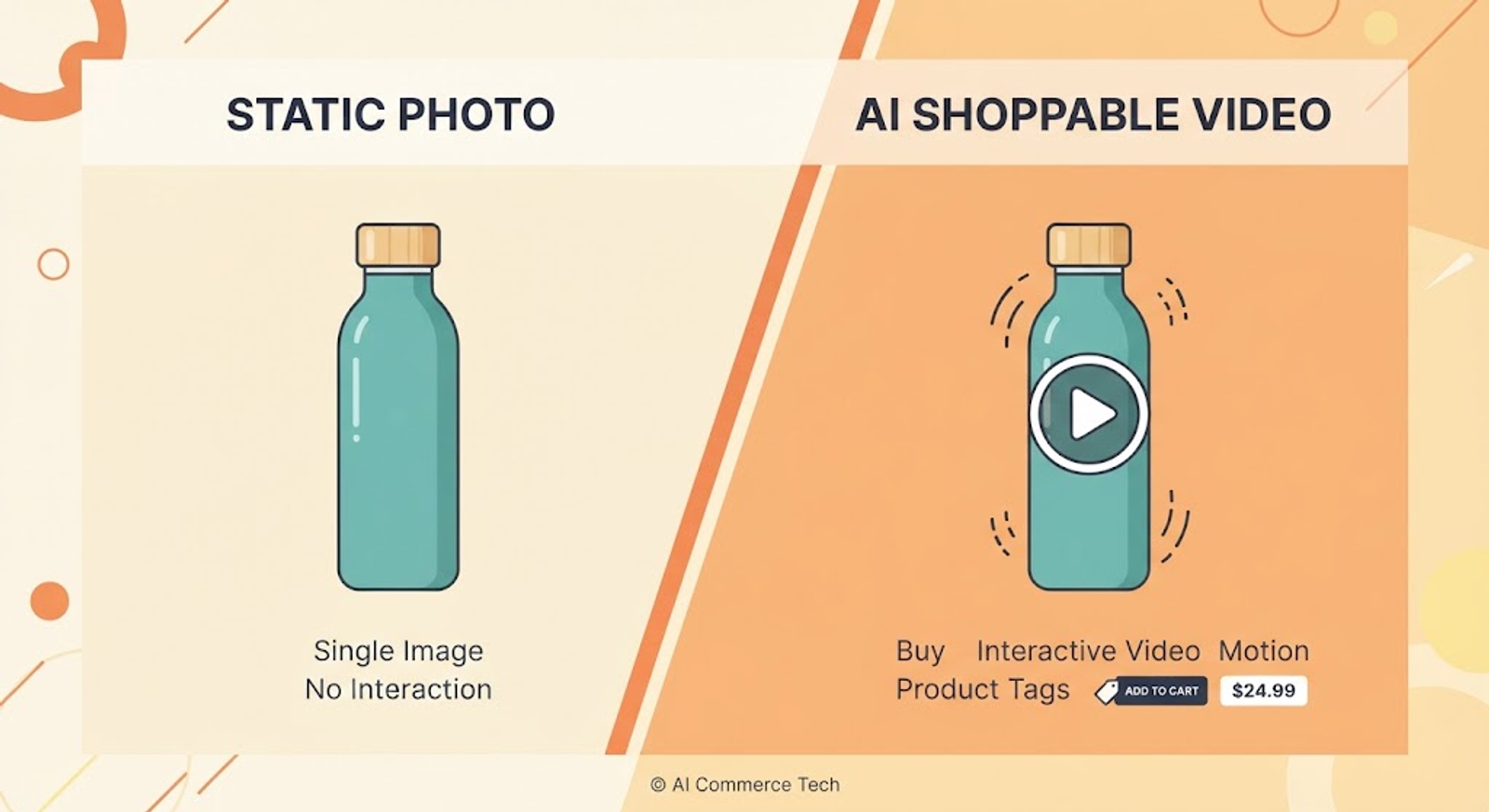
Quick answer: TikTok Shop sellers are using AI to turn existing product photos into shoppable videos in under 10 minutes, for a few dollars instead of the $500-$2,000 a traditional video shoot used to cost. eMarketer projects US TikTok Shop sales will hit $23.4 billion in 2026, up 48% year-over-year, with AI-generated product demos and "digital twin" creators driving a meaningful share of that growth. Shoppable videos already convert up to 20% better than static image posts, which is the core reason this shift happened as fast as it did.
If you're selling on TikTok Shop and still filming every product video yourself, this is the workflow that's replacing that — plus the real trust risk that comes with it.
1. What's Actually Happening on TikTok Shop Right Now
Direct answer: Sellers and affiliate creators are replacing filmed product demos with AI-generated ones, using either TikTok's own built-in Seller Center tool or third-party image-to-video platforms, and in some cases using fully AI-generated "digital twin" creators instead of a real person on camera.
This isn't a fringe experiment anymore. WSJ/CMO Today reporting describes AI videos as actively "flooding" TikTok Shop, and affiliate-marketing trade coverage confirms brands are now reviewing their program terms specifically to decide whether AI-generated affiliate content should be allowed at all.
Why This Happened So Fast
Traditional product video production runs $500-2,000 and takes days. AI-generated demos run under $5 and finish in under 10 minutes. For sellers who need fresh content daily to stay visible in TikTok Shop's algorithm, that cost and speed gap was always going to win once the output quality became good enough to post.
2. The Real Market Numbers Behind This Shift
- $23.4 billion — eMarketer's projected 2026 US TikTok Shop sales figure, up 48% year-over-year.
- 20% higher conversion — how much better shoppable video reportedly performs versus static image posts, based on 2025 platform data.
- 60% to 26% — the honest counter-number: reported consumer enthusiasm for AI-generated creator content fell from roughly 60% in 2023 to about 26% by early 2026.
- ~50% — the share of consumers who say they're concerned about brands posting AI content without disclosing it.
What This Data Doesn't Tell You
The reporting behind these figures confirms the trend direction and the market size, but doesn't quantify what share of TikTok Shop's actual sales volume flows through AI-made clips versus human-filmed ones, and it doesn't detail how aggressively TikTok itself currently enforces disclosure on Shop listings specifically. Treat the direction as real and the exact ratios as still forming rather than fixed.
3. How to Make an AI Product Video, Step by Step
Step 1: Write a short script using a proven framework. PAS (Problem-Agitate-Solution) or AIDA (Attention-Interest-Desire-Action) structures work well for a 15-30 second product video, and a chat-based AI tool can help draft the first version quickly.
Step 2: Generate your voiceover before touching video. Get the audio finalized first, since its pacing determines your visual cut timing — not the other way around. ElevenLabs' free tier covers roughly 10,000 characters a month, enough for 5-7 short videos, with paid voice cloning available from around $5/month for a more natural result.
Step 3: Animate your existing product photos into video. You don't need to film anything new — an image-to-video tool converts a still product shot into motion, whether through TikTok's own Seller Center tool or a third-party generator.
Step 4: Layer in captions, on-screen text, and music. TikTok's algorithm reads spoken audio, on-screen text, and visuals together to classify what a video is about, so clear, readable overlay text genuinely affects discoverability, not just viewer comprehension.
Step 5: Keep it under 30 seconds and lead with the product benefit. Native-feeling shoppable videos that highlight one clear benefit in the first three seconds consistently outperform longer, unfocused ones.
Step 6: Post and monitor performance before scaling. TikTok's algorithm runs new posts through an initial classification and small-audience test before deciding whether to widen distribution — a single video's early performance data is worth checking before mass-producing more of the same angle.
4. TikTok's Own Built-In AI Tool vs Third-Party Options
What TikTok's Seller Center Offers Directly
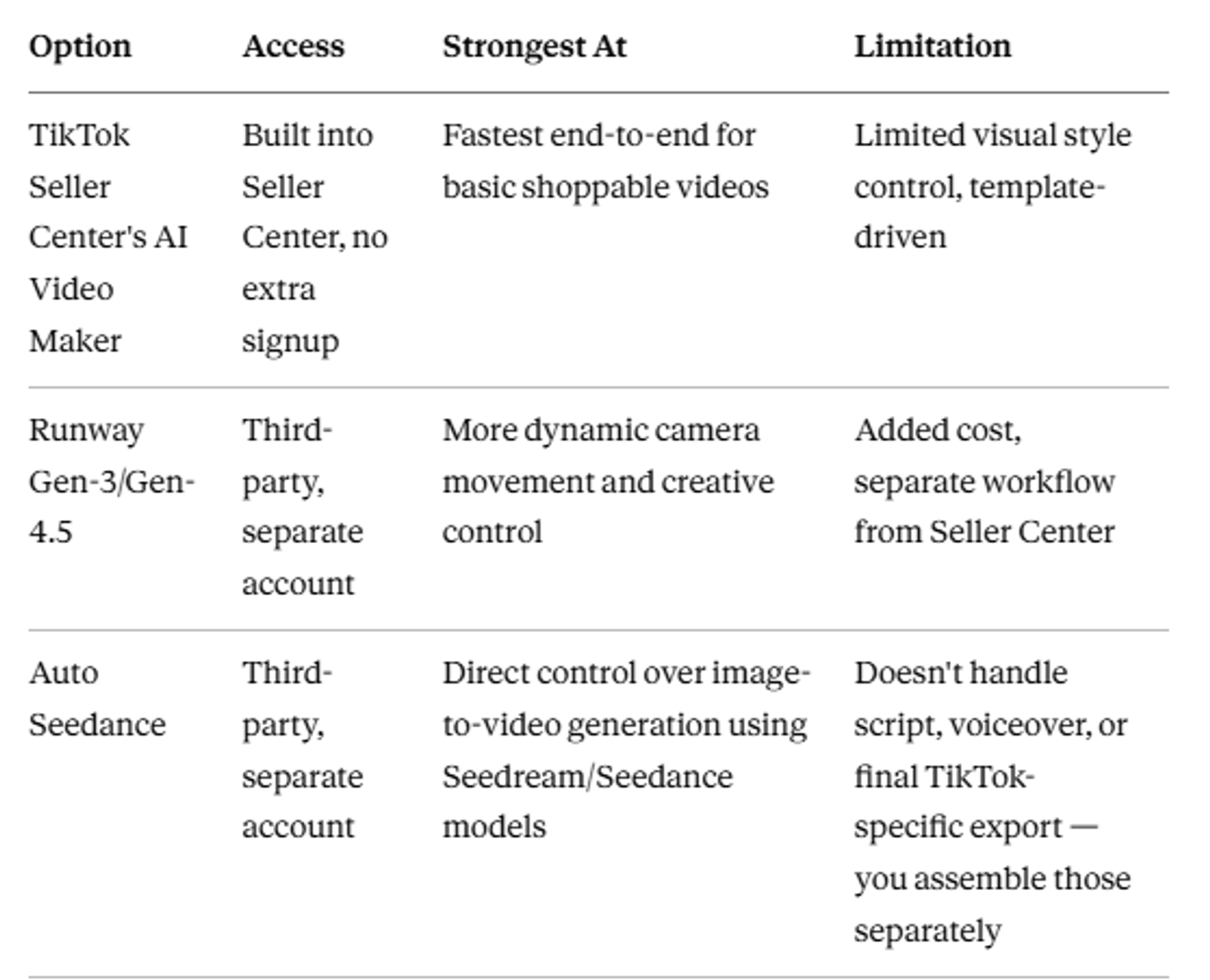
TikTok's Seller Center includes a native AI video maker: select a product, upload images or clips, and it generates a ready-to-post shoppable video, with options to adjust length, language, voiceover, and templates before publishing.
How That Compares to Third-Party Tools
5. TikTok Shop's Posting Frequency Rules
Direct answer: As of January 2026, TikTok limits reach for creators who post five or more "non-interactive" videos in a single week, which makes higher-quality, genuinely engaging content more important than sheer volume, even with AI making high-volume output easier than ever.
That rule matters directly for anyone assuming AI simply means "post as many videos as possible." Speed lets you test more creative angles, but the platform is specifically structured to penalize low-effort volume rather than reward it unconditionally.
6. The Trust Problem Nobody's Advertising
This is the part most "how to make AI TikTok Shop videos" guides skip entirely, and it's worth being direct about it.
Reported consumer enthusiasm for AI-generated creator content dropped from around 60% in 2023 to roughly 26% by early 2026 — a real decline, not a plateau. Combined with close to half of consumers saying they're uneasy about undisclosed AI content, sellers leaning entirely on AI-generated demos without any disclosure are building on ground that could shift under them if consumer skepticism keeps compounding or platform disclosure rules tighten.
Brands are already responding: affiliate marketing coverage confirms companies are actively reviewing program terms to decide whether AI-generated affiliate content should be allowed at all, and how closely it needs to be monitored under TikTok Shop's open affiliate model.
7. Where Auto Seedance Fits Into This Workflow
Full transparency, consistent with how we've described this tool in every comparison on this site: Auto Seedance is not a TikTok-specific, end-to-end shoppable video platform the way TikTok's own Seller Center tool is. It handles the image-to-video generation step specifically — turning a product photo into an animated clip using Seedream/Seedance models — and doesn't include TikTok-native export formatting, script generation, or built-in voiceover.
If TikTok's own Seller Center tool covers your needs already, there's little reason to add a separate tool into the mix. Where Auto Seedance becomes genuinely useful is when you want more control over the specific visual output for a product than a template-driven native tool provides — multi-angle shots, a specific lifestyle setting, or a look that doesn't fit Seller Center's built-in styles — while still handling script, voiceover, and TikTok-specific export yourself.
Final Thoughts
The cost and speed argument for AI product videos on TikTok Shop is real and not going away. What's less settled is whether the trust cost catches up to the savings, especially as consumer skepticism keeps climbing and brands keep tightening their own affiliate content rules.
Use the speed. Don't skip the disclosure conversation just because the tools make it easy to.
Sources
- eMarketer's 2026 TikTok Shop sales projection and growth rate, as reported in WSJ/CMO Today coverage
- Consumer enthusiasm and disclosure-concern figures cross-referenced against AI Weekly's industry analysis of the same reporting
- TikTok Shop posting-frequency policy and Seller Center AI Video Maker features cross-referenced against TikTok's own Seller Center documentation
- Shoppable video conversion-rate data cross-referenced against 2025 platform performance reporting cited in independent seller guides
Frequently Asked Questions
How much does it cost to make an AI product video for TikTok Shop?+
Under $5 in most cases, using free or low-cost tiers of voiceover and image-to-video tools, compared to $500-2,000 for a traditional filmed video.
Do I need to disclose that my TikTok Shop video was made with AI?+
There's no single uniform requirement confirmed across all cases, but with roughly half of consumers uneasy about undisclosed AI content and brands actively reviewing affiliate program terms on this exact issue, disclosure is a real trust consideration, not just a legal checkbox.
Does TikTok have its own AI video tool for sellers?+
Yes — Seller Center's built-in AI Video Maker lets sellers select a product, upload images or clips, and generate a shoppable video with adjustable length, language, voiceover, and templates.
How many product videos should I post per week?+
Stay under five "non-interactive" videos weekly, since TikTok limits reach beyond that threshold as of its January 2026 policy — quality and engagement matter more than raw volume.
Do shoppable videos actually convert better than photo posts?+
Yes — 2025 platform data shows shoppable videos converting up to 20% better than static image posts.
Is consumer trust in AI-generated product content actually declining?+
Reported enthusiasm for AI-generated creator content fell from around 60% in 2023 to about 26% by early 2026, a real and documented shift, though exact current TikTok Shop-specific ratios aren't fully quantified in available reporting.
Can Auto Seedance create a complete TikTok Shop video by itself?+
No — it handles the image-to-video visual step specifically. Script writing, voiceover, and TikTok-native export are separate steps you handle with other tools or TikTok's own Seller Center features.
Keep reading
Suggested Related Articles
GPT-6 Sol vs Luna: What OpenAI's Pricing Table Actually Means
GPT-6 Sol and Luna launched September 2026 with a pricing table that confused much of Reddit on day one. Here's the real cost breakdown, the naming trap versus GPT-5.6, and which model actually fits your work.

How to Automate Product Video From Your Ecommerce Catalog With AI
AI product video automation actually works two different ways — generative AI and template-based pipelines. Here's the full workflow, which tools fit which job, and what goes wrong once you scale past a handful of products.
10 Best AI Video Generators for Faceless YouTube Channels in 2026 (Real Costs, Real Workflows)
We compared 10 AI video generators for faceless YouTube channels in 2026 — real creator-reported costs, an honest look at one-click vs. manual workflows, and which tool actually fits your format and budget, not just the highest-rated demo reel.
How to Use ChatGPT Images 2.5 for AI Photo Editing
The prompt structure that makes ChatGPT Images 2.5 editing work, plus Sketch, comments, templates, Flare vs Sunburst, pricing, and the real limits.