ChatGPT Ads vs Google, Meta & YouTube: The Real 2026 Cost Comparison
ChatGPT Ads cost $3-5 per click and $25-60 per 1,000 impressions in 2026 — here's exactly how that compares to Google, Meta, and YouTube, what the ads look like, who sees them, and how to set up a campaign.

Umer Khan has spent the last two years building and testing AI-assisted content workflows for YouTube, from scripting to 2D animation. He writes about what actually works in AI video production including the parts that don't.
Quick answer: ChatGPT ads cost $3-$5 per click (CPC) or $25-$60 per 1,000 impressions (CPM) as of mid-2026, which sits above Meta's average CPC ($0.50-$3) but below or in line with Google Search CPCs in most competitive B2B categories. ChatGPT ads convert at roughly 1.5x to 4x the rate of typical referral channels in early data, which changes the comparison once you look at cost-per-customer instead of cost-per-click alone.
If you've been advertising on Google or Meta for years, ChatGPT Ads is a genuinely different animal — not just a new place to put the same banner. This breaks down the actual numbers, how the ads look, when users see them, and exactly how to set one up.
1. What Are ChatGPT Ads?
Direct answer: ChatGPT Ads are sponsored cards that appear below ChatGPT's response to a user's question, shown only to Free and ChatGPT Go tier users, matched to the conversation's context rather than typed keywords.
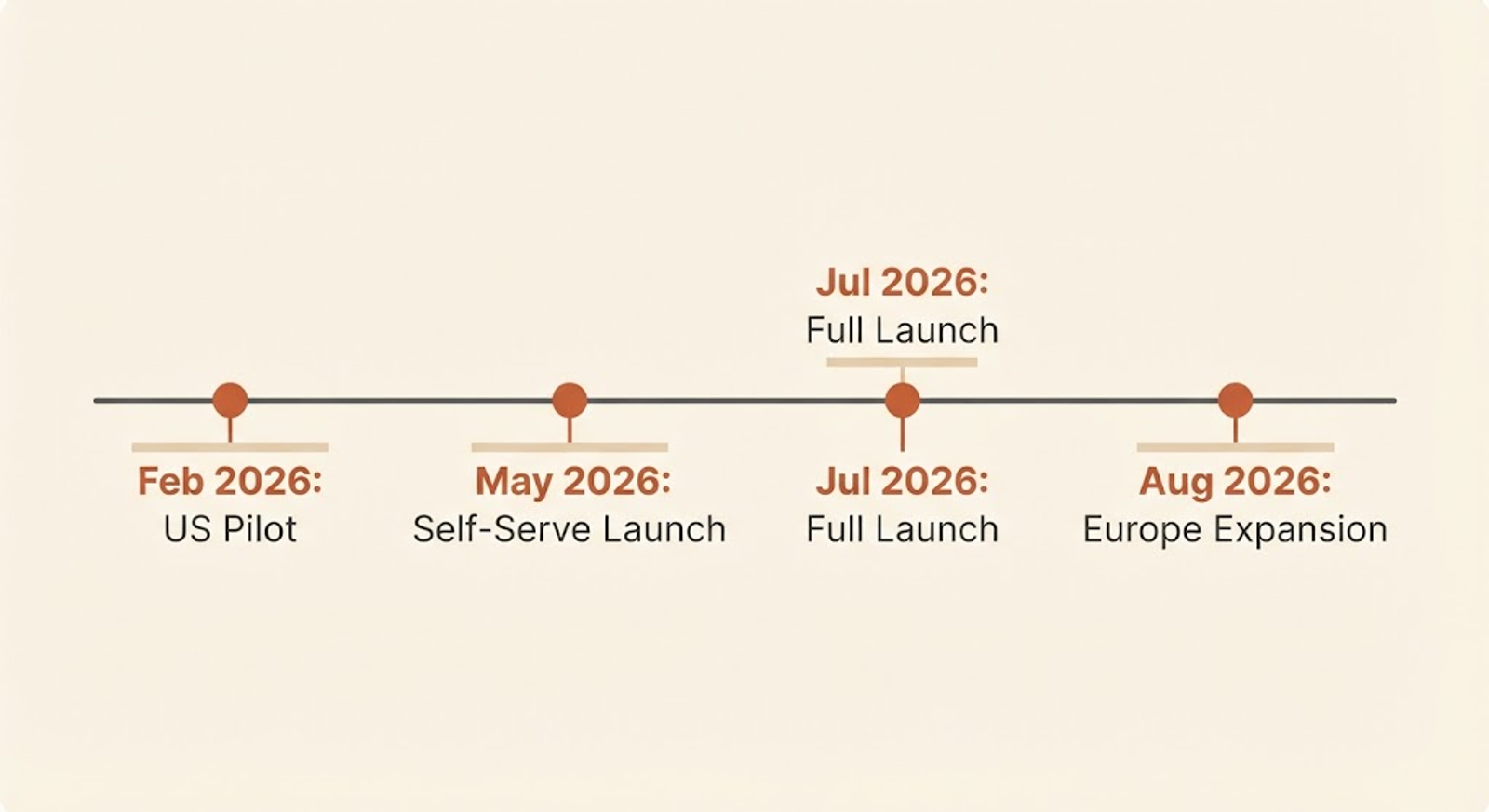
OpenAI began testing this on February 9, 2026, after years of Sam Altman publicly calling advertising in an AI product "uniquely unsettling." The launch reopened that exact quote in tech coverage, since OpenAI had previously framed ads as a last resort rather than a core business line.
2. How Do ChatGPT Ads Actually Work?
Direct answer: Advertisers set up campaigns through OpenAI's self-serve Ads Manager, writing broad "context hints" describing the kinds of questions or situations their ad should match — not exact-match keywords like Google Search Ads use.
The Matching System Is Different From Search or Social
OpenAI matches ads using anonymized, aggregated relevance signals drawn from the current conversation's topic, rather than individual chat history or precise behavioral targeting the way Meta does. OpenAI states explicitly that ads never influence ChatGPT's actual answers and run on separate systems from the core chat model — a distinction the company has repeated in nearly every official statement since launch, likely because it's the most common concern users raise.
3. What Do ChatGPT Ads Look Like to Users?
Direct answer: The current ad format is a single sponsored card — called a "chat_card" internally — appearing below the AI's response, containing a title, short description, an image, and a link, clearly labeled as sponsored and visually separated from the answer itself.
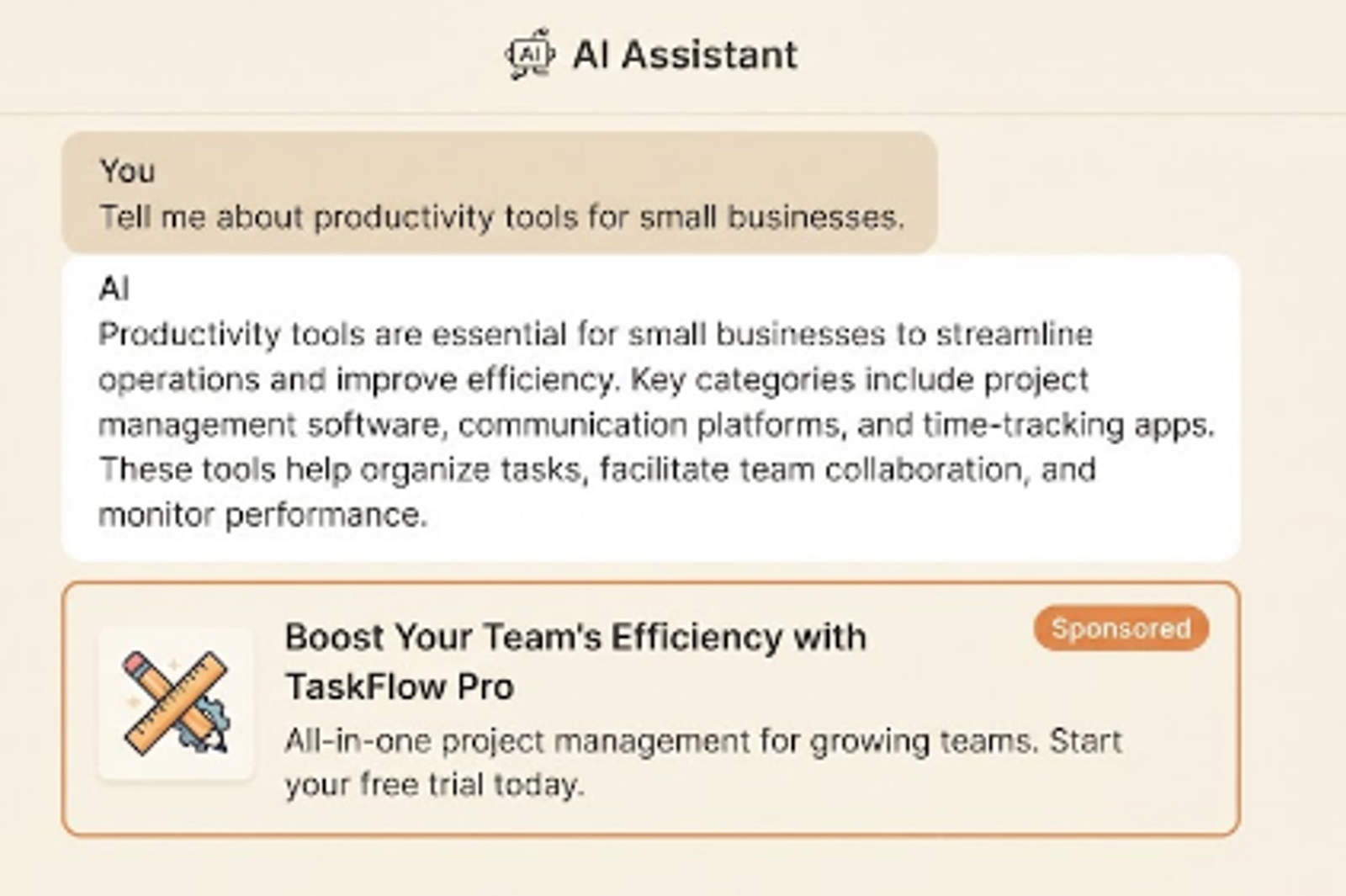
There's currently only one ad format live. That's a meaningful difference from Google or Meta, where advertisers choose between a dozen-plus formats (carousel, video, display, shopping, and more). ChatGPT's simpler format reflects how early this ad platform still is compared to the mature ecosystems it's being compared against.
4. When and Who Sees ChatGPT Ads?
Direct answer: Only users on the Free and ChatGPT Go plans see ads — Plus, Pro, Team, Business, and Enterprise subscribers never see them, regardless of region.
The Rollout Has Expanded Fast
Ads started as a US-only pilot on February 9, 2026. By August 11, 2026, they'd expanded to the UK, Mexico, Brazil, Japan, and South Korea, and on August 18, 2026 — just a day before this article's last update — OpenAI announced expansion to 31 European countries including Germany, France, Spain, and Italy. A company spokesperson has said fewer than 20% of eligible users were shown ads daily during the pilot phase, which is useful context if you're expecting every free-tier conversation to carry a sponsored card.
5. ChatGPT Ads Cost: The Full 2026 Breakdown
How Pricing Has Changed Since February
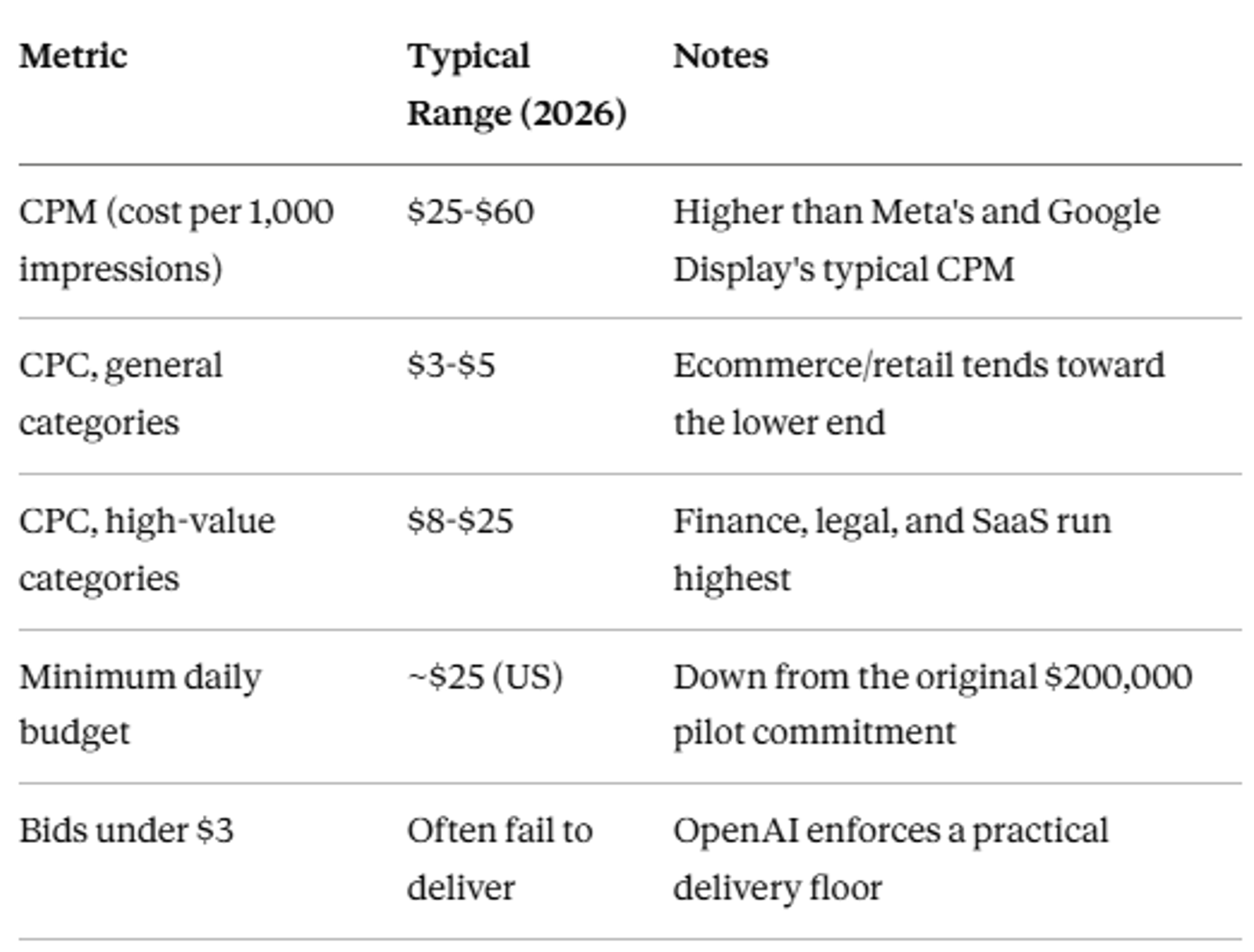
ChatGPT Ads launched at a flat $60 CPM with a $200,000 minimum commitment, aimed squarely at large enterprise advertisers. That model didn't hold. By late April 2026, OpenAI shifted to CPC bidding, with market-clearing rates settling around $3-5 per click for general categories, and the $200,000 minimum was fully removed by the May 5, 2026 self-serve launch — the current minimum daily budget in the US is around $25.
What 1,000 Impressions or Clicks Actually Costs
6. ChatGPT Ads vs Google Ads vs Meta Ads vs YouTube Ads
Cost Comparison, Side by Side
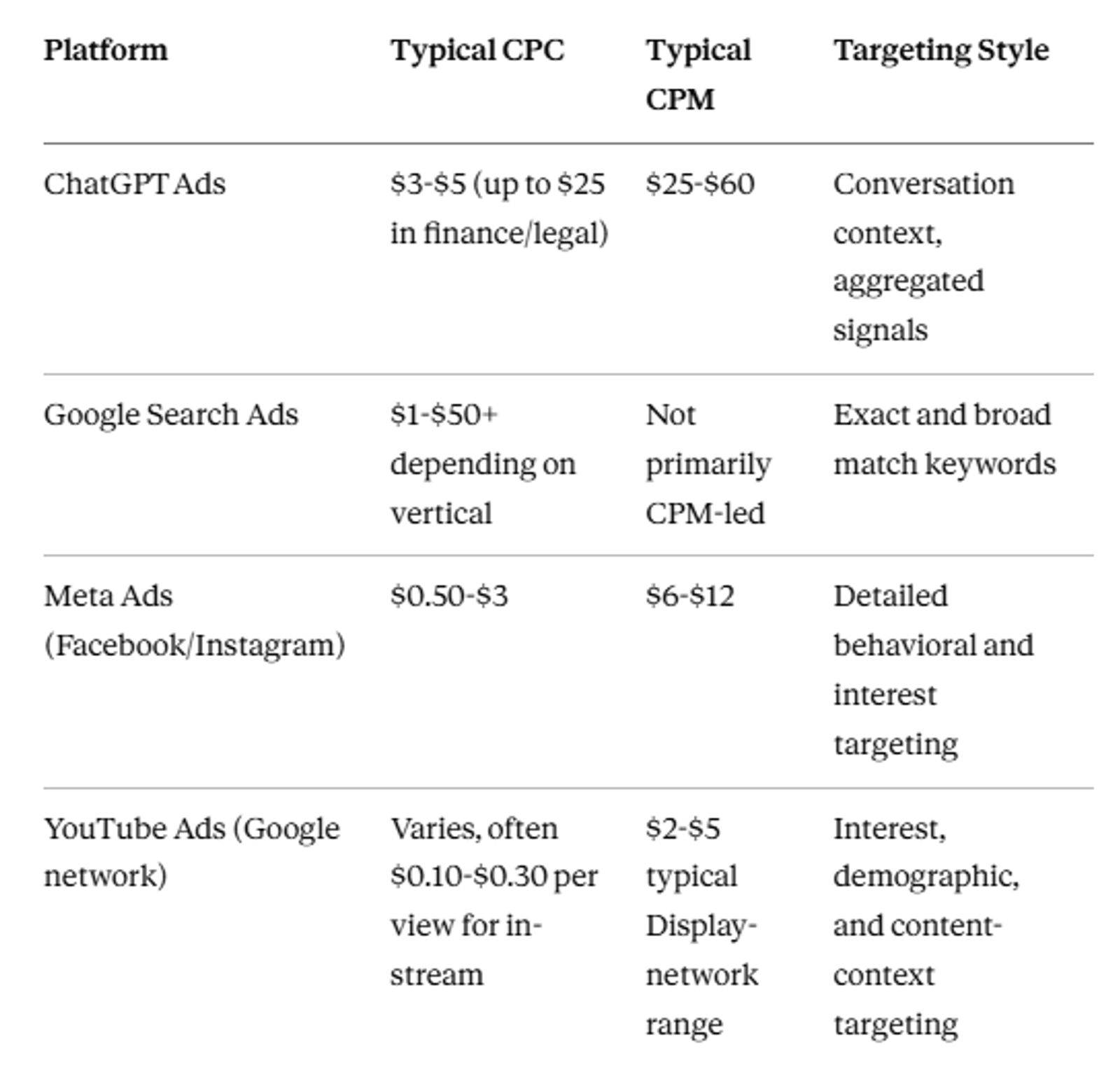
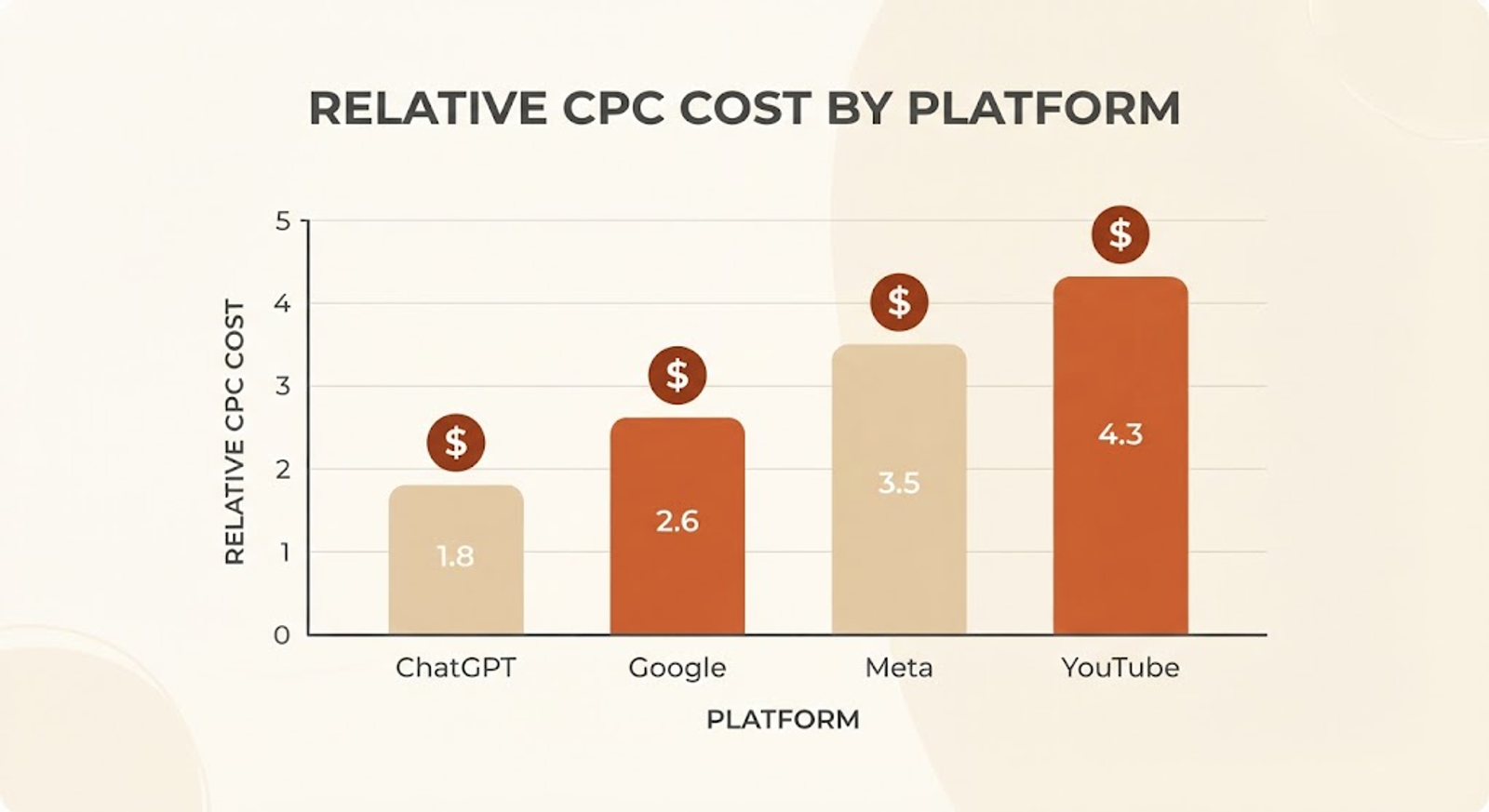
What the Raw Numbers Don't Tell You
ChatGPT Ads look expensive next to Meta on cost-per-click alone. But early data from Criteo, tracking 500 US retailers, found ChatGPT-referred users converting at roughly 1.5x the rate of other referral channels — and other industry reports put that multiple as high as 4x in matching verticals. That reframes the comparison from "which platform is cheapest per click" to "which platform delivers the cheapest actual customer," and on that measure ChatGPT looks considerably more competitive than the raw CPC suggests.
7. How to Set Up Your First ChatGPT Ad Campaign
Step 1: Go to OpenAI's advertiser sign-up page at ads.openai.com and create an advertiser account.
Step 2: Set your campaign objective and budget. Self-serve access has no minimum spend commitment as of mid-2026, with a practical starting daily budget around $25.
Step 3: Choose CPC or CPM bidding. OpenAI recommends starting with a $3-5 CPC bid for most categories; CPM campaigns typically start around $25.
Step 4: Write context hints, not keywords. Describe the situations, questions, or needs your ideal customer brings to a ChatGPT conversation, rather than listing exact-match search terms.
Step 5: Upload your ad creative. A title, short description, and image are required for the current chat_card format.
Step 6: Set up conversion tracking. OpenAI's OAIQ pixel and Conversions API, both live since May 5, 2026, let you track clicks through to on-site conversions using a first-party cookie on your own domain.
Step 7: Launch and monitor through Ads Manager. Reporting covers impressions, clicks, CTR, average CPC/CPM, and conversions, with UTM parameters flowing into your existing analytics tools.
8. Problems and Limitations to Know About
The ad ecosystem here is younger than Google's or Meta's, and that shows up in a few concrete ways worth knowing before you commit budget.
Limited Format and Targeting Options
Right now there's exactly one ad format (the chat_card) and targeting relies on broad contextual signals rather than the granular audience-building tools advertisers are used to on Meta. Cost-per-acquisition (CPA) bidding — standard on Google and Meta — is still in development, expected later in 2026 rather than available today.
Inventory Is Narrower Than Headline Numbers Suggest
Only Free and Go tier users see ads, and even among them, a company spokesperson has said fewer than 20% see ads on a given day during the rollout phase. That's a much smaller addressable inventory than ChatGPT's total user count implies at first glance.
Final Thoughts
ChatGPT Ads isn't a cheaper version of Google or Meta, and it isn't trying to be. It's a new kind of ad inventory sitting inside genuine purchase-research conversations, priced accordingly, with a measurement stack that's still catching up to what advertisers expect from mature platforms.
Whether it's worth your budget depends entirely on whether you can connect that ad spend to actual revenue, not just impressions — the same test that mattered for every ad platform that came before it.
Sources
- OpenAI's own official announcements on testing ads in ChatGPT and expanding ChatGPT Ads across Europe
- Cost and CPC/CPM benchmark data cross-referenced across WebFX, eSEOspace, Lapis, Launchcodex, and Ads-OpenAI.com pricing guides published between May and August 2026
- Conversion rate comparisons drawn from Criteo's reported data covering 500 US retailers, as cited in independent industry coverage
Suggested Related Articles:
Frequently Asked Questions
How much do ChatGPT ads cost per 1,000 impressions?+
CPM pricing runs roughly $25-$60 depending on category and competition, down from the initial $60 flat launch price in February 2026.
Is ChatGPT advertising cheaper than Google Ads?+
It depends on the vertical. ChatGPT's $3-5 CPC is cheaper than many competitive Google Search categories (legal, insurance, SaaS) but more expensive than Google's lower-competition categories.
Do all ChatGPT users see ads?+
No — only Free and ChatGPT Go tier users see ads. Plus, Pro, Team, Business, and Enterprise subscribers never see them.
What does a ChatGPT ad actually look like?+
A single sponsored card below the AI's response, containing a title, short description, image, and link, clearly labeled as sponsored.
Is there a minimum budget to advertise on ChatGPT?+
Not anymore. The original $200,000 pilot commitment was removed by the May 5, 2026 self-serve launch; the current practical minimum is around $25 per day.
Which countries currently show ChatGPT ads?+
The US since February 2026, followed by the UK, Mexico, Brazil, Japan, and South Korea in August, and 31 European countries added starting August 18, 2026.
Do ChatGPT ads convert better than Google or Meta ads?+
Early data suggests higher conversion rates in some categories — reported as roughly 1.5x to 4x other referral channels in preliminary industry data — though the ecosystem is still young enough that these figures will likely shift as inventory scales.
Keep reading
Suggested Related Articles
GPT-6 Sol vs Luna: What OpenAI's Pricing Table Actually Means
GPT-6 Sol and Luna launched September 2026 with a pricing table that confused much of Reddit on day one. Here's the real cost breakdown, the naming trap versus GPT-5.6, and which model actually fits your work.
How to Automate Product Video From Your Ecommerce Catalog With AI
AI product video automation actually works two different ways — generative AI and template-based pipelines. Here's the full workflow, which tools fit which job, and what goes wrong once you scale past a handful of products.
10 Best AI Video Generators for Faceless YouTube Channels in 2026 (Real Costs, Real Workflows)
We compared 10 AI video generators for faceless YouTube channels in 2026 — real creator-reported costs, an honest look at one-click vs. manual workflows, and which tool actually fits your format and budget, not just the highest-rated demo reel.
How to Use ChatGPT Images 2.5 for AI Photo Editing
The prompt structure that makes ChatGPT Images 2.5 editing work, plus Sketch, comments, templates, Flare vs Sunburst, pricing, and the real limits.